Jonathan Barnell

JonathanBarnell

Software engineer in Topeka, Kansas. I taught myself to code in a state public health lab during COVID, and I have been shipping software ever since.

See the work
Jonathan Barnell
Based in
Topeka, Kansas
Day job
Senior software engineer, Alarm.com
Nights
Founder and engineer, Buoy Money
Also
Pilot, licensed in high school

Lab bench to production

I trained as a molecular biologist. In March 2020 I started at the Kansas state public health lab as a microbiologist, running COVID tests. The sequencing team was tracking samples in spreadsheets, so I taught myself Python and built the pipeline that replaced them.

Most of that pipeline was written before my first computer science class. I went on to complete the six core courses of Penn's master's in computer and information technology and stopped there, because by then the job was teaching me more. I joined Alarm.com in 2022 and work on AI agent systems today. At night I build my own products: a budgeting app that is live on the web and Google Play, a wearable on a circuit board I designed, and the self-hosted software my household runs on.

Where I have been

Work

  • Alarm.com, senior software engineer2022 to now
  • Kansas Dept. of Health and Environment, data analyst2021
  • Kansas Dept. of Health and Environment, microbiologist2020
  • Washburn University, research assistant2019
  • Kansas Dept. of Health and Environment, lab intern2017, 2018

School

  • University of Pennsylvania, MCIT core courses6 of 10 courses
  • Washburn University, B.S. Molecular Biology and Biotechnology2019

What I have worked on, in order of appearance

  1. Crickets2018. A food startup in Topeka
  2. Fruit flies2019. Research on muscle development
  3. A virus2020. COVID testing for Kansas
  4. Pipelines2021. Sequencing data for the state lab
  5. Software2022. The day job, at Alarm.com
  6. My ownMost nights since 2025

It started with a virus

When the Kansas state lab began sequencing SARS-CoV-2, every sample was tracked by hand across spreadsheets and the lab's records system. I was a microbiologist, not a programmer. I taught myself Python and wrote the package that did the tracking instead, most of it before my first computer science class.

It pulls patient demographics from the Oracle records system, loads run statistics from the sequencers, gathers the sequence files, reads the lineage calls from Nextclade and Pangolin, builds the report the state epidemiologists need and sends it over SFTP. Separate scripts prepare uploads for GISAID and Nextstrain.

I had been one of the analysts doing that work by hand. Each run saved three hours or more of it, and 20 analysts were each doing several runs a day. The code is still public.

Read the code on GitHub

Column list of the pipeline's results table in SQL Server, from sample number and lineage to coverage and run dates
The results table, from the repository's own documentation.
8
workflows behind one runner script
186
commits, August 2021 to February 2022
3+
hours of hand work saved on every run
MIT
licence, open to any state lab

The daily run, start to finish

  1. Import demographicsPatient details for each sample come out of the lab's Oracle records system.
  2. Parse run statisticsQuality figures are read from each sequencer run.
  3. Compile the FASTA filesThe sequences from a run are gathered into one file.
  4. Parse Nextclade resultsClade calls are read from Nextclade.
  5. Parse Pangolin resultsLineage calls are read from Pangolin.
  6. Build the epidemiology reportEverything is joined into the report the state epidemiologists need.
  7. Send the reportThe report goes to the epidemiologists over SFTP.
  8. Build the Nextstrain reportA second file is prepared for the state's Nextstrain build.

Senior in four years

100xand more: the cut in cost for a typical conversational agent request, compared with the same work over MCP.
3titles in four years. Software engineer in April 2022, engineer II in 2024, senior in April 2026, ahead of the usual schedule.

I joined Alarm.com as a software engineer in April 2022. Today I work on AI agent systems there, in C#, Python and Kubernetes.

The part I can describe is a graph-based architecture I developed for conversational agents. It cut the cost of a typical help request from our chat agent by more than two orders of magnitude compared with doing the same thing over MCP.

The rest of that work belongs to my employer, so most of this page is what I build on my own time.

My house runs on it

Photos, documents, health records, the budget and the media library live on two machines at home. They are reachable only over Tailscale, with no ports open to the internet.

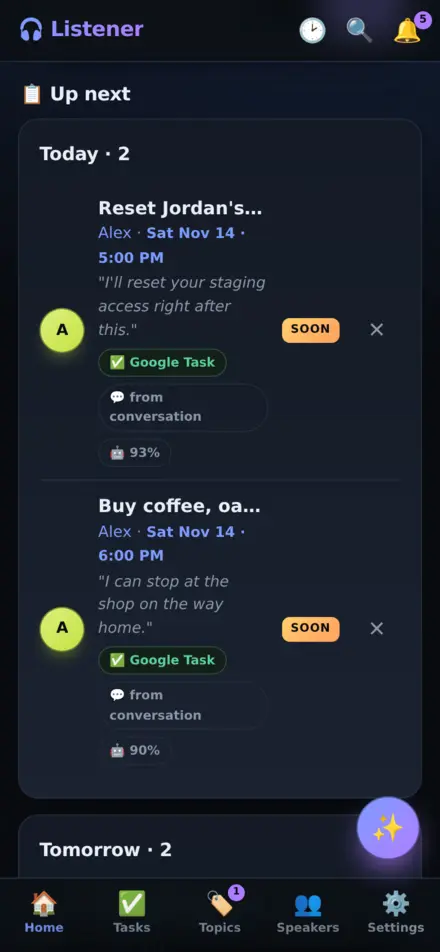
  • Listener. A wearable that turns a day of speech into transcripts and tasks, on my own GPU.
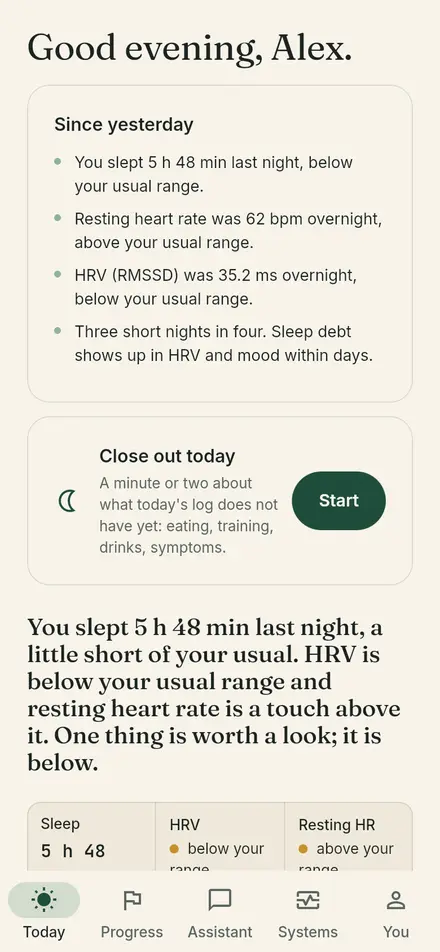
  • SelfKept. A household health record that compares each person with their own usual range.
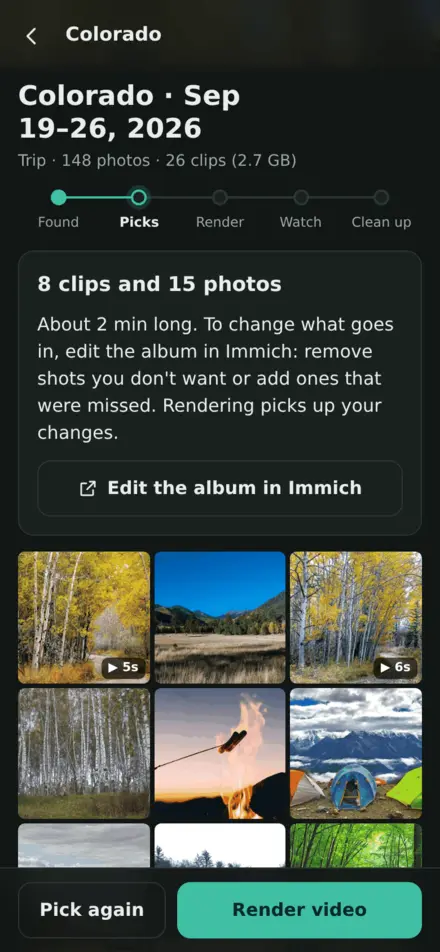
  • Highlights. Trip videos cut from a self-hosted photo library.
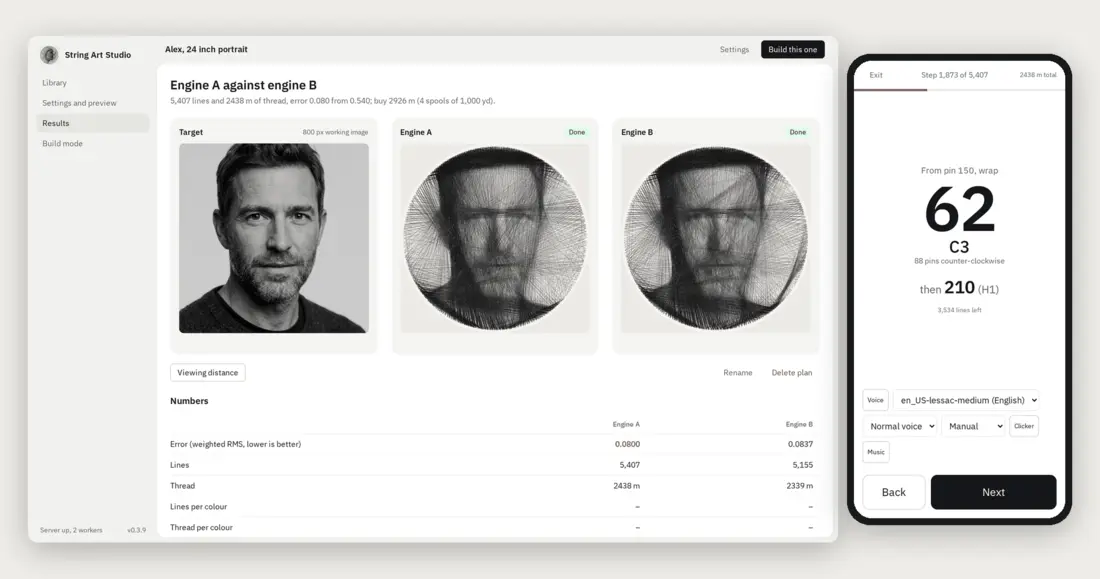
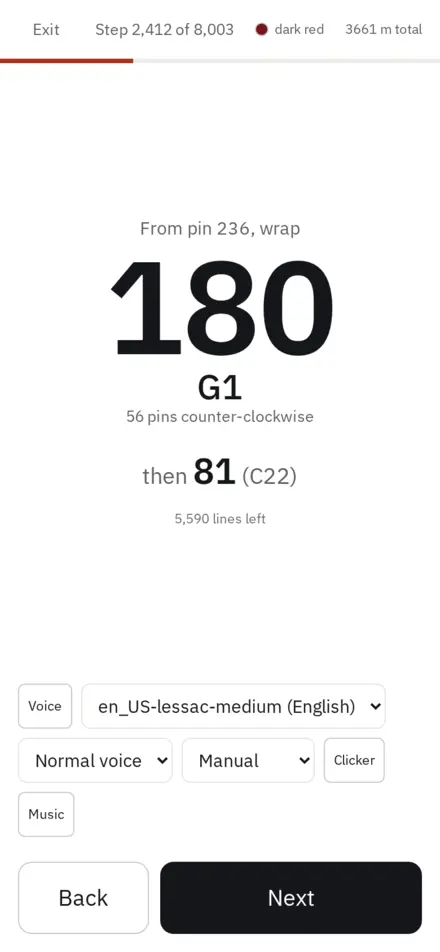
  • String Art Studio. A photo becomes a pin-and-thread build plan, read aloud step by step.
  • Watchman. Accountability and image protection, open source, because internet safety should not cost $18 a month.
  • Doc Keeper. The household's documents and inventory, searchable and backed up.

About 48 containers, a 12 GB GPU for local models, and backups every hour.

Listener on a phone: tasks it heard today, each with the sentence it came from
Listener
SelfKept on a phone: what changed since yesterday in sleep, heart rate and HRV
SelfKept
Highlights on a phone: clips and photos picked for a Colorado trip video
Highlights
String Art Studio build mode on a phone: wrap to pin 180 next
String Art Studio

One long thread

String Art Studio turns a photo into a build plan: one continuous thread wound between 240 pins. This is a real plan from its solver, drawn here turn by turn.

0 of 5,086 turns. Next pin: 0

The sample portrait the plan was made from
The photo it started from, a sample that ships with the project. The face is AI-generated, not a real person. The finished piece would take 2,256 metres of thread.

Buoy Money counts up

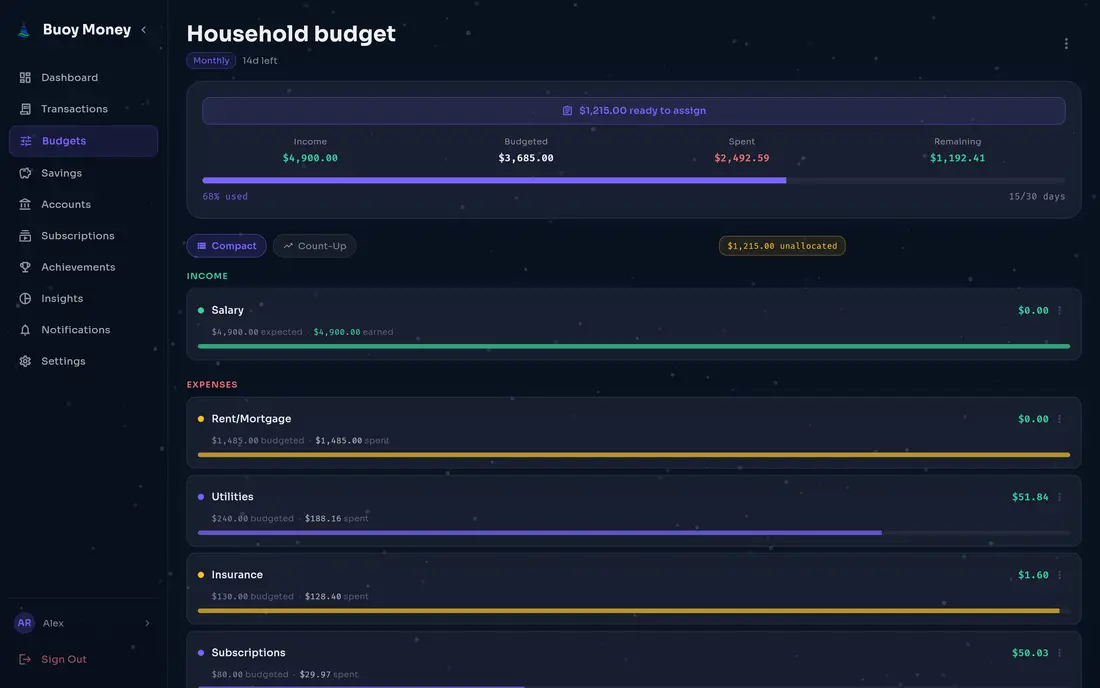
Most budgets start full and drain. In Buoy Money each category earns a daily allowance, so the number you see is what you have earned minus what you have spent.

Filmed in the app on a demo account.

Asking the assistant to change a budget.

One Flutter app covers web, Android and iOS, on a .NET 10 and PostgreSQL backend. It connects to banks through Plaid, takes payment through Stripe, and has an MCP server so an AI assistant can read a budget without being able to move money.

The hosted edition is live on the web and Google Play. The same codebase ships as a free self-hosted Docker image, with bank data sealed to the user's own server using HPKE, checked against the test vectors in RFC 9180.

buoymoney.com   Source on GitHub

First commit
July 2025
Releases
78, latest v1.5.37
Commits
2,570
Code
About 335,000 lines of C# and Dart
Tests
More than 4,000
Team
One person, plus agents

Everything on the shelf

Fourteen projects, from a cricket startup to a live budgeting app. The colour is the kind of work.

Buoy Money

A budgeting app where each category earns a daily allowance, so the budget counts up as the month goes on. Live on the web and Google Play, with a free self-hosted edition.

When
2025 to now
Built with
Flutter, .NET 10, PostgreSQL
Connects to
Plaid, Stripe, MCP
Releases
78, latest v1.5.37
Buoy Money budgets screen on desktop

Listener

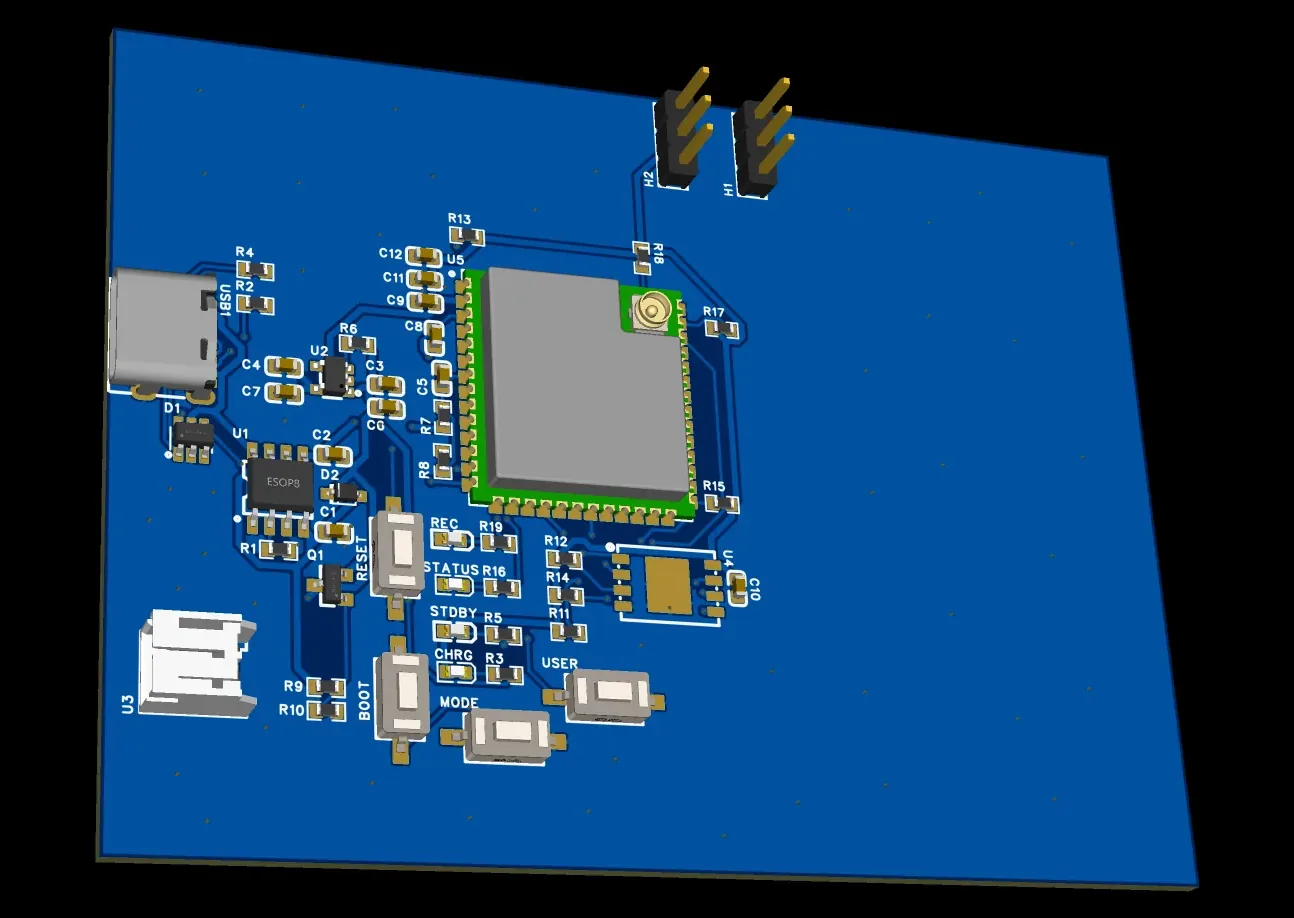
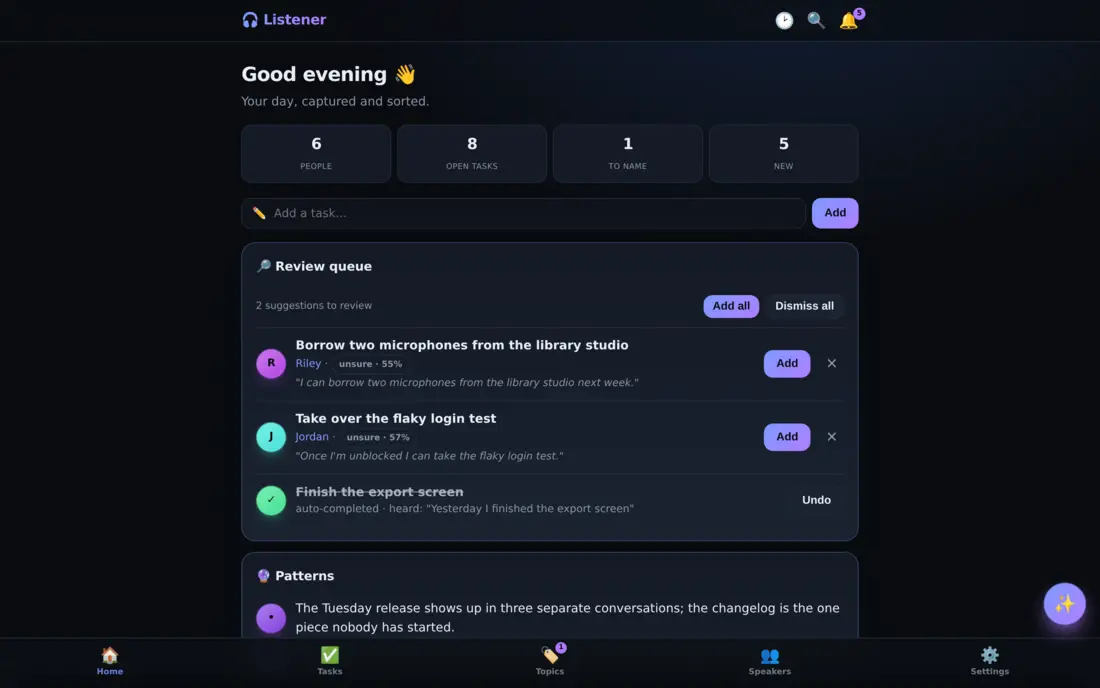
An all-day audio wearable on a circuit board I designed around an ESP32-S3. It uploads to a GPU server at home that transcribes, works out who was speaking and pulls out tasks, so no company holds a recording of my day.

When
2026
Board
Custom two-layer PCB, 87 by 65 mm
Server
WhisperX, pyannote, Ollama
Decision records
57
3D render of the Listener circuit board: an ESP32-S3 module, USB-C port, battery connector, flash chip and five buttons
The board, rendered from the layout.The board in 3D, exported from the layout. Drag to turn it.
Listener review queue on desktop
The review queue, with invented data.
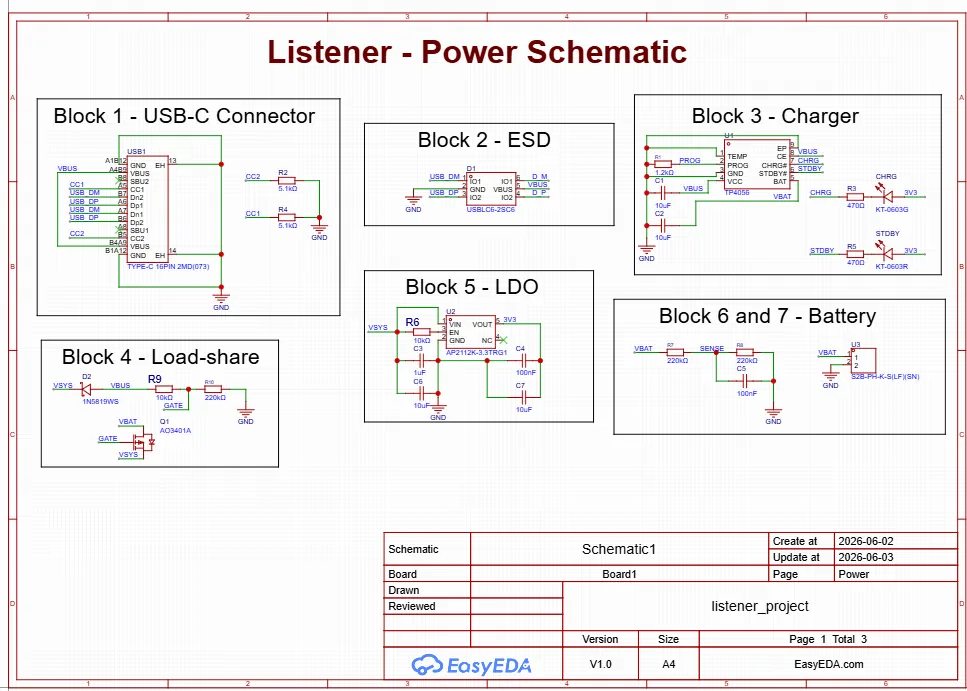
Listener power schematic: USB-C connector, ESD protection, charger, load sharing, regulator and battery sensing
Power: USB-C in, charger, load sharing, regulator, battery sense.
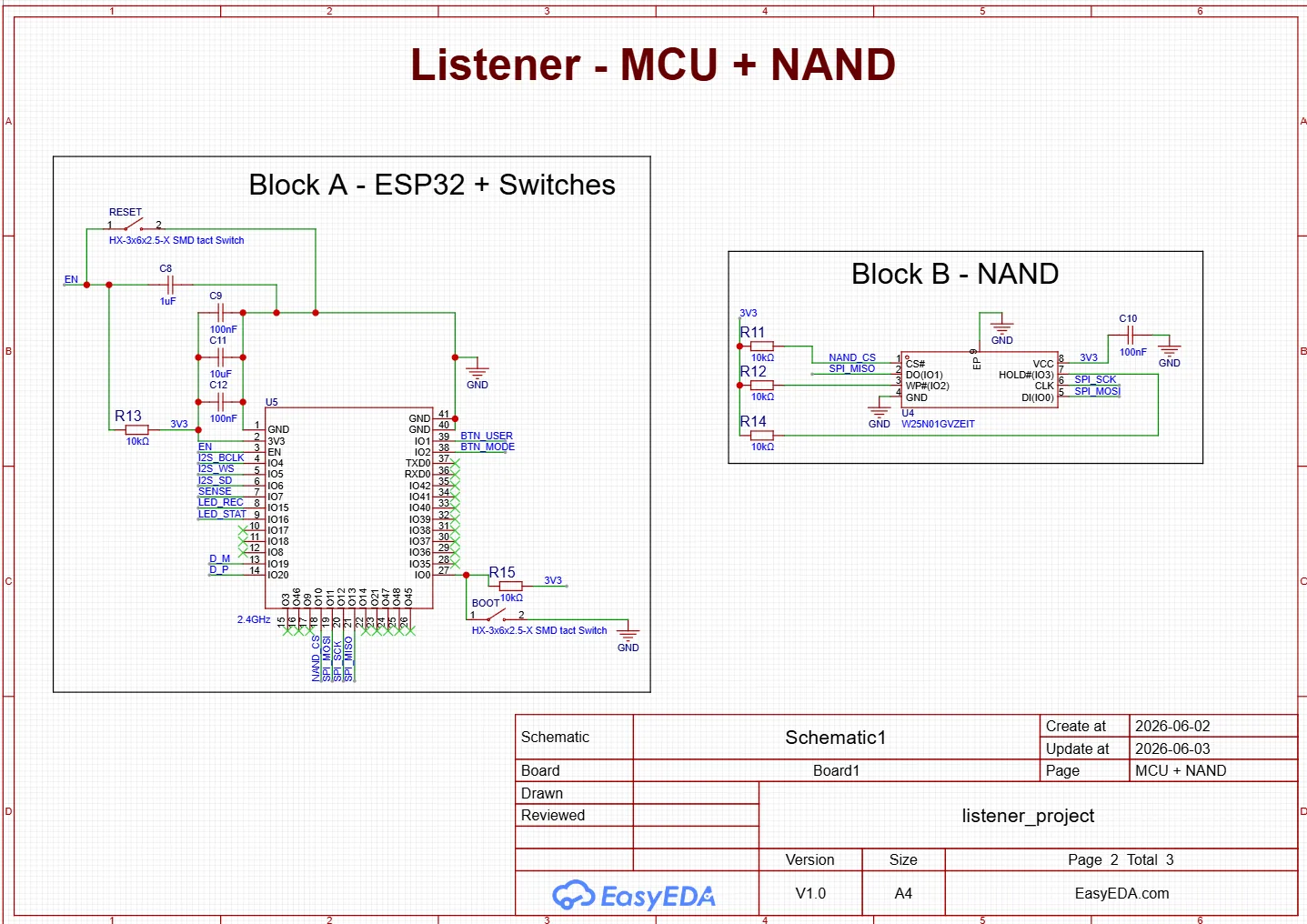
Listener schematic of the ESP32-S3 module, its switches and the NAND flash chip
The ESP32-S3 and the flash chip that holds a day of audio.

Watchman

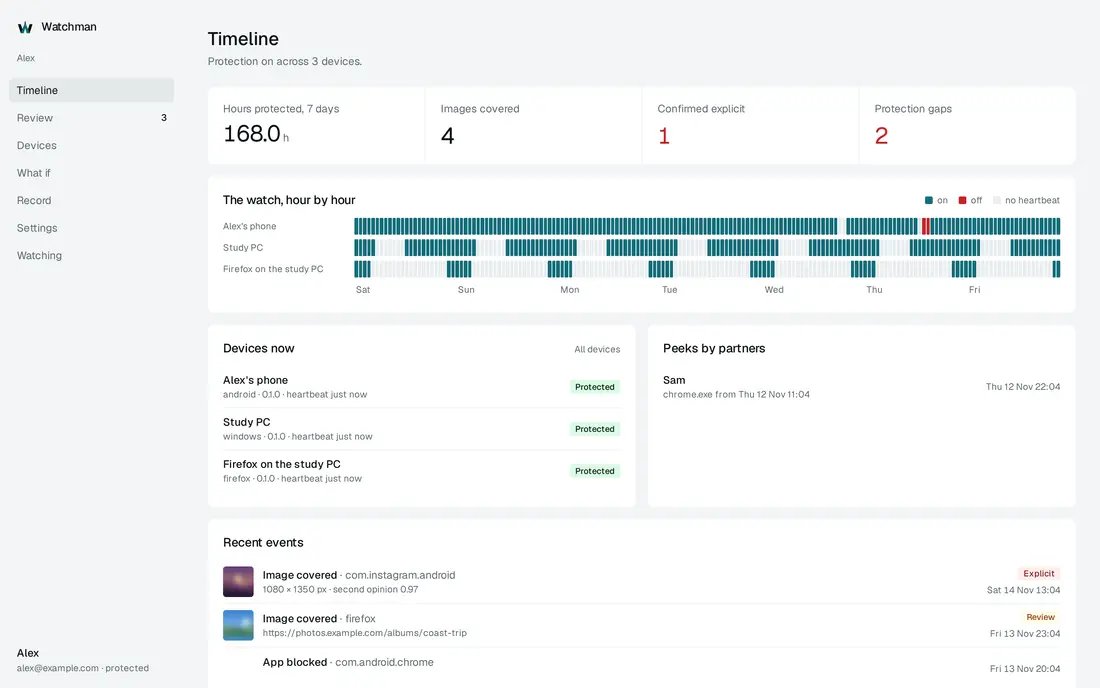
Self-hosted accountability and real-time image protection. Images are judged on the device, explicit ones are blurred, and chosen partners get a weekly digest. It is open source, because internet safety should not sit behind an $18 a month charge.

When
2026
Server
Python, FastAPI, ONNX Runtime
Clients
Android, Windows, browsers, iOS
Licence
AGPL-3.0
Watchman timeline showing hours protected across three devices

SelfKept

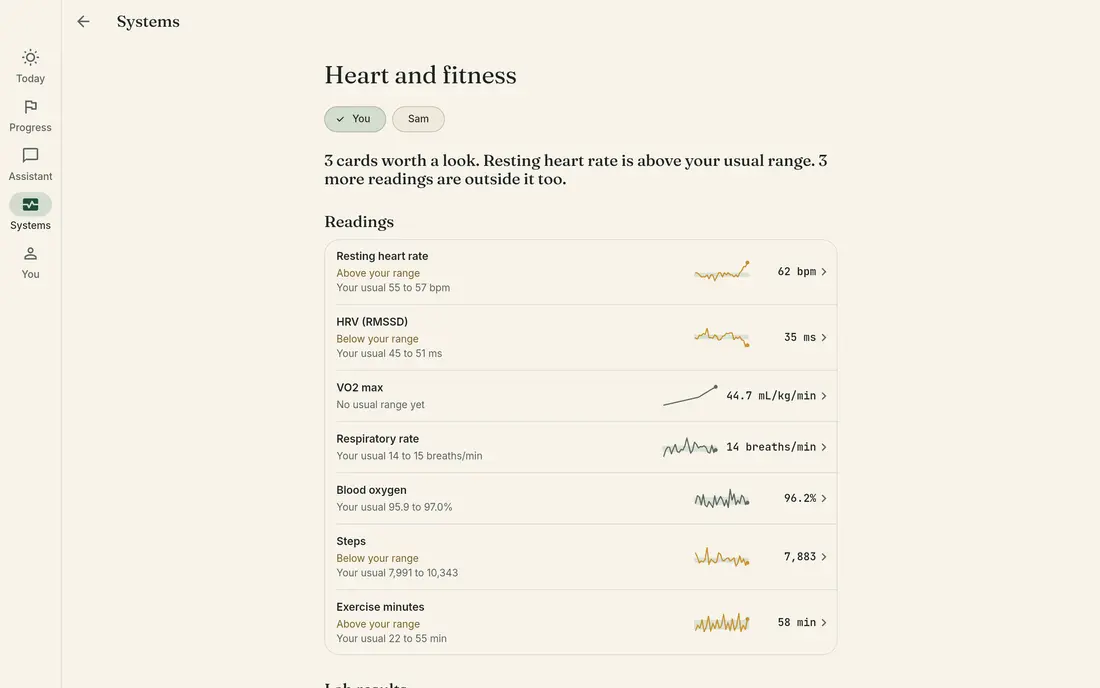
A self-hosted health record for a household. Sleep, activity, heart rate and blood panels from everyone's phones and watches, compared with each person's own 28-day range and described in plain words.

When
2026
Built with
.NET 10, Flutter, PostgreSQL
AI
Local models only, by default
Releases
10, latest v0.1.9
SelfKept heart and fitness readings on desktop

Highlights

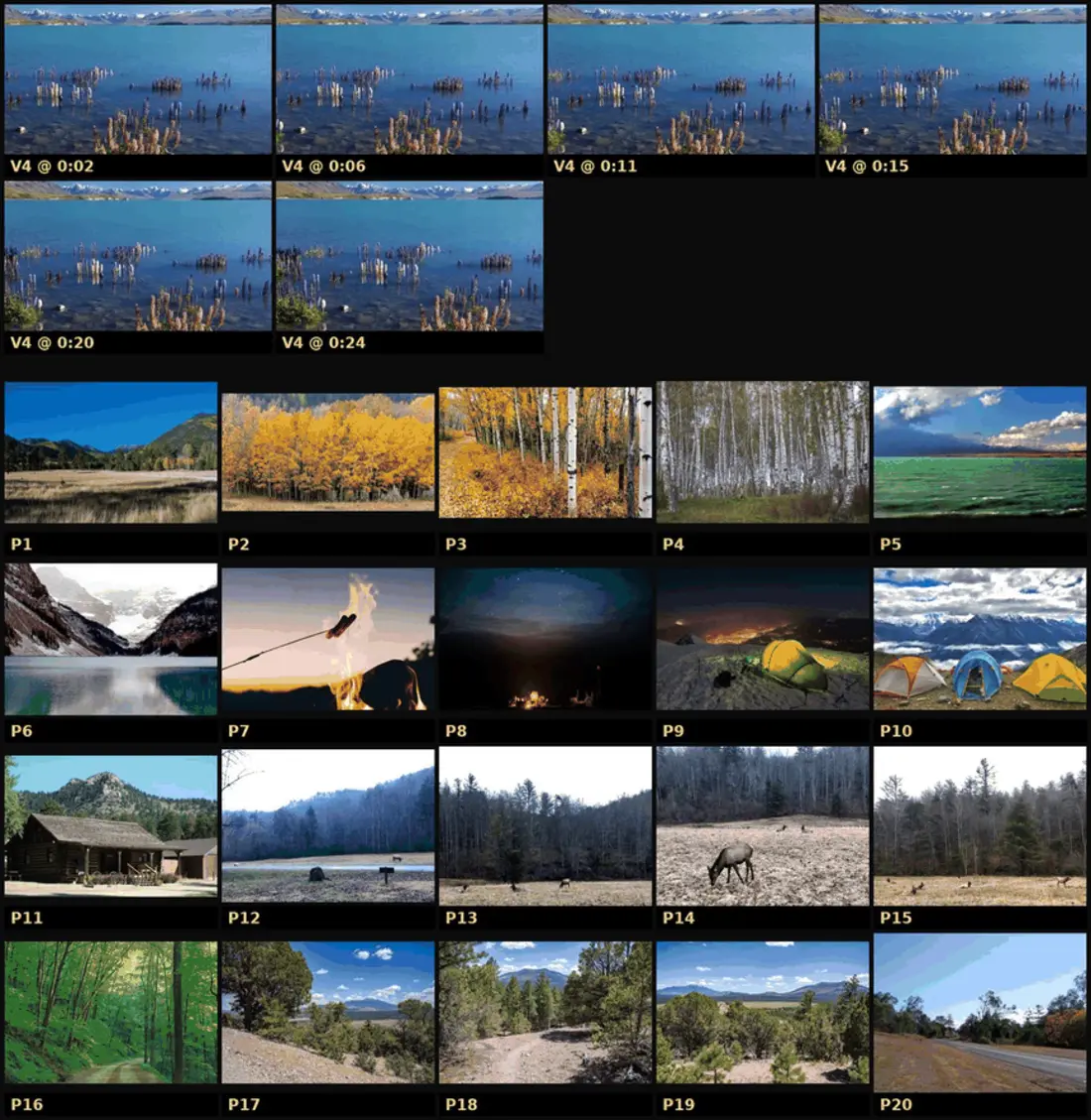
Highlight videos from a self-hosted Immich photo library. Claude picks the moments from contact sheets, ffmpeg cuts them, and the finished video lands back in Immich.

When
2026
Built with
Python, FastAPI, ffmpeg
Finds trips by
Distance from the place you are most often
Release
v0.2.0
Contact sheets of trip photos that the model picks from

Doc Keeper

A private archive for a household's important documents, plus a home inventory. A local vision model reads each scan, and search combines full text, trigrams and vectors.

When
2026
Built with
Paperless-ngx, FastAPI, SQLite, Ollama
Reads
Licence barcodes and passport MRZ lines
Backups
Nightly, with a restore check

String Art Studio

Turns a photo into a pin-and-thread build plan, then reads the steps aloud from a phone while you string. One engine solves the whole piece as a single continuous thread. The first physical build is still ahead of me.

When
2026
Built with
Python, numpy, Numba
Exports
True-size templates, a printable drilling jig, DXF
Licence
MIT
A portrait beside two string art renders and the phone build mode

Going Down

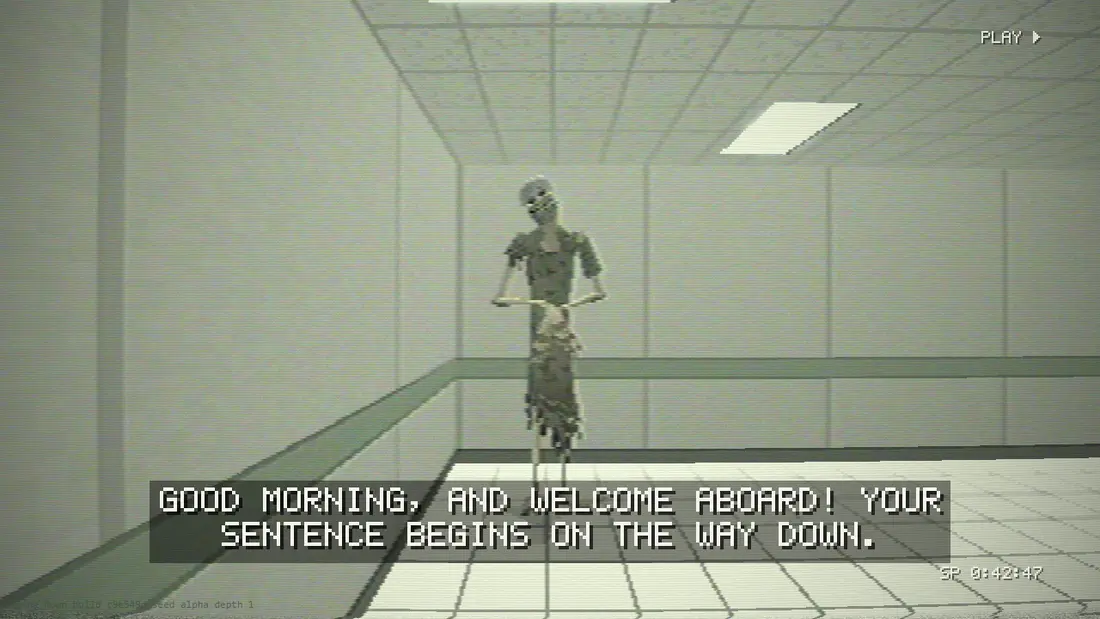
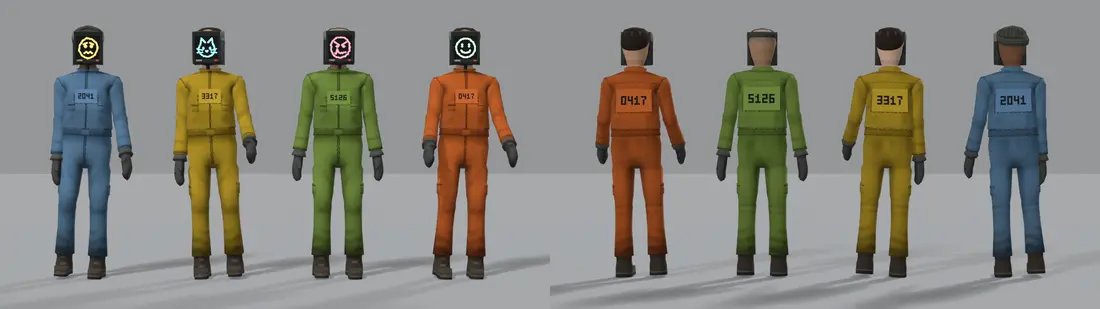
A co-op suspense game for up to eight players. Convicts ride a lift down through a buried city and are paid for instrument readings taken close to things that each obey one unbreakable rule. There are no weapons.

When
2026
Built with
Godot 4, typed GDScript
Characters
Built and rigged by Blender scripts
First week
322 commits
In-game view with a tape filter: a gaunt figure in a clinic corridor
The first browser version. It loads from GitHub Pages when you press the button, and it is a large download.

Scripture Solace

A pipeline that picks a passage, narrates it, matches music and footage, burns in word-synced subtitles and uploads to YouTube three mornings a week. Passages come only from a hand-curated table, so a verse is never lifted out of its context.

When
2024 to now
Built with
Python, Gemini, ElevenLabs, ffmpeg
Uploads
417
Views
About 60,000
One of the shorts, as uploaded. Muted here.

The homelab

Two machines at home running about 48 containers: photos, media, documents, passwords and monitoring. Everything is reachable only over Tailscale, with no ports forwarded.

When
Ongoing
Runs on
Docker, Tailscale, AdGuard Home
GPU
RTX 4070 Super, for local models
Backups
Hourly, with restic

Local model router

A small model reads each chat message and sends it to a fast 9B model or a slower 35B one, so the household assistant answers quickly when it can. A guard strips household tools and memories before anything goes to a cloud model.

When
2026
Runs on
Ollama, Open WebUI
Hardware
One 12 GB GPU

Kansas pipeline

The Python package I wrote at the Kansas state lab to move SARS-CoV-2 sequencing data from the instruments to the epidemiologists. Most of it was written before my first computer science class.

When
2021
Built with
Python, pandas, Oracle, SQL Server
Size
8 workflows, 186 commits
Licence
MIT

Kismet research

Undergraduate research on kismet, the fruit fly counterpart of the human gene CHD7, and its part in muscle growth and development.

When
2019
Lab
Washburn University
Presented
ASCB annual meeting, Washington, D.C., 2019

Arbor

A startup that six Washburn students formed to farm crickets and sell protein powder. It began as Agrotech Enterprises and became Arbor. I directed research and development. We won the Washburn pitch competition, placed in the top five at regional, national and international contests, and the Associated Press carried the story.

When
2018
My part
Research and development
Plan
A gravity-fed feeder in place of costly robotics
Covered by
Associated Press, Topeka Capital-Journal

On therecord

Jonathan Barnell and three teammates holding a Kansas Entrepreneurship Challenge sign
The cricket team at the Kansas Entrepreneurship Challenge. We placed in the top five at regional, national and international competitions.
YearWhatWhereResult
2026Senior software engineerAlarm.comPromoted early
2026Buoy Money, self-hosted editionGitHubOpen source, AGPL-3.0
2026Buoy MoneyWeb and Google PlayLive since August
2021SARS-CoV-2 sequencing pipelineKansas Dept. of Health and EnvironmentOpen source, MIT
2019Sibberson AwardWashburn UniversityTop-ranking senior
2019B.S. Molecular Biology and BiotechnologyWashburn University4.0 GPA
2019Kismet and muscle development in fruit fliesASCB annual meeting, Washington, D.C.Research presented
2019Mortar Board, Phi Kappa Phi, Tri-BetaHonor societiesMember
2018Students launch a cricket protein startupAssociated PressWire story
2018Overcoming the ick factorTopeka Capital-JournalFeature story
2018Washburn Pitch CompetitionWashburn UniversityFirst place